

The honest head-to-head
SEO vs Google Ads: which wins?
Paid clicks can fill the diary this week; rankings pay you back for years. Here's the speed, the cost per lead, what happens when either one stops, and the case for running both at once.
What's the difference in plain English?
Google Ads is rented attention: you bid for the slot above the results and pay for every click. SEO is owned ground: you build pages Google ranks on merit, and those clicks cost nothing. The other names, PPC and SEM, are mostly just the ads wearing different badges.
PPC is pay-per-click, the billing model behind Google Ads. SEM is search engine marketing, which once covered both camps but in most quotes now means the paid side. And organic is the industry word for the unpaid results underneath the ads. Plain names from here: ads, and rankings.
Side by side, the trade-offs look like this:
| Google Ads | SEO | |
|---|---|---|
| First lead | Days. A campaign can be live this week. | Months. New pages take time to earn rank. |
| How you pay | Per click, at auction, for as long as it runs. | For the work. The clicks themselves are free. |
| Control | Set the suburbs, hours and budget. On and off like a tap. | Google decides the order. You influence it with work, not settings. |
| When you stop | Leads stop the same day. | Rankings hold, then fade slowly if nobody tends them. |
| What you keep | Account history and data. | The pages, the reviews and the listing. All yours. |
| Best for | Fast work now. Testing which searches pay. | A lead source that gets cheaper the longer it runs. |
How fast does each start bringing in work?
Ads win the sprint. A Google Ads campaign can sit at the top of the exact search you want within days of going live, which makes it the fastest legal way to get in front of people already looking. Rankings are a build: months of work before the enquiries turn steady.
There's no queue-jumping the unpaid results. Google decides those on merit, and merit takes months to prove: pages written for each service, a Google listing that's kept alive, reviews arriving steadily. Three to six months is the realistic window before rankings carry real weight, longer in crowded metros.
None of that makes ads a stopgap. Plenty of trade businesses run them permanently and profitably. What a properly-run campaign involves week to week is on our Google Ads for tradies page.
What does each one cost?
Google Ads is an auction, so the price is whatever your competitors make it. Across the two published Australian Google Ads cost guides we reviewed in July 2026, home-services clicks sit at around $4 on average, electrician clicks at $10 to $20, and emergency keywords as high as $35. SEO is priced as labour: you pay for work, and clicks are free.
| What's being bid on | Published Australian range |
|---|---|
| Home services average (plumbing, electrical, air con) | $4.10 a click average; $2.20 to $8.50 typical |
| Sydney service businesses | $4.80 to $7.50 a click |
| Melbourne service businesses | $4.50 to $7.00 a click |
| Electrician keywords, general | $10 to $20 a click |
| Electrician keywords, emergency | $15 to $35 a click |
| Electrical work, cost per lead | $80 to $200 a lead |
Compiled across the two published Australian Google Ads cost guides we reviewed in July 2026. They disagree with each other more than you'd hope; treat every figure as a starting point, and your own first month of data as the real answer.
The disagreement is the story. There's no official Google benchmark for Australian trades, so every published number is one company's account data or estimate, and the same trades show up anywhere between about $2 and $35 a click depending on the source and the urgency of the job.
The SEO column is harder to put one number on because you're buying skilled hours, and the market rates are in our SEO cost in Australia guide. The practical difference holds either way: ad spend scales with every click, while rankings don't bill you per visitor.
What happens when you stop paying?
Switch off Google Ads and the leads stop that day; the ad vanishes with the budget. Switch off SEO and not much happens at first: pages that rank keep ranking, reviews keep sitting there, and the work keeps arriving for months. It fades as competitors keep building and you don't.
That's not a flaw in ads, it's the deal: you're renting the top of the page, and rent stops buying the room the day you stop paying. Rankings behave more like gear you bought. Money spent this year keeps earning next year, even if next year's budget gets tight.
If you're still weighing whether that slow build suits your business at all, start with is SEO worth it, where we argue against ourselves for a full page.
Do people actually click on ads?
Mostly not. SparkToro's 2024 study of real US search behaviour found paid ads capture only around 1% of all Google clicks, while roughly 360 of every 1,000 searches end in a click on an unpaid result outside Google's own properties. Most searchers scroll straight past the paid slots.
Two things in the ads' defence before that settles anything. Fewer than one search in five shows an ad at all, which drags the average down. And advertisers bid where the money is, so the job-ready searches, the burst pipe, the dead switchboard, are exactly where ads crowd in and earn their keep.
The split is moving, too. US click data comparing January 2025 with January 2026 shows paid results taking a clearly bigger share of shopping searches as Google gives ads more room on the page. Rankings still win the raw click count. The gap is just narrower than it used to be.
What do the real numbers look like?
Two campaigns from our own client list, one from each side of the fence. Full disclosure on the paid one: it ran on Meta, Facebook and Instagram, not Google, so read it as what well-run paid ads cost per lead on another platform.
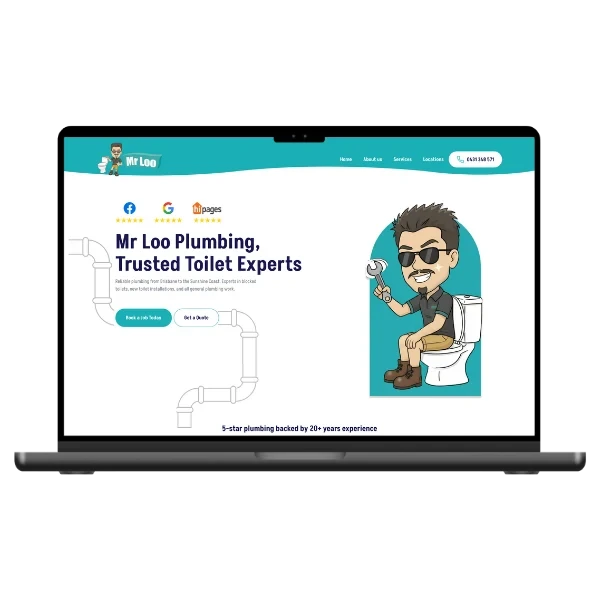
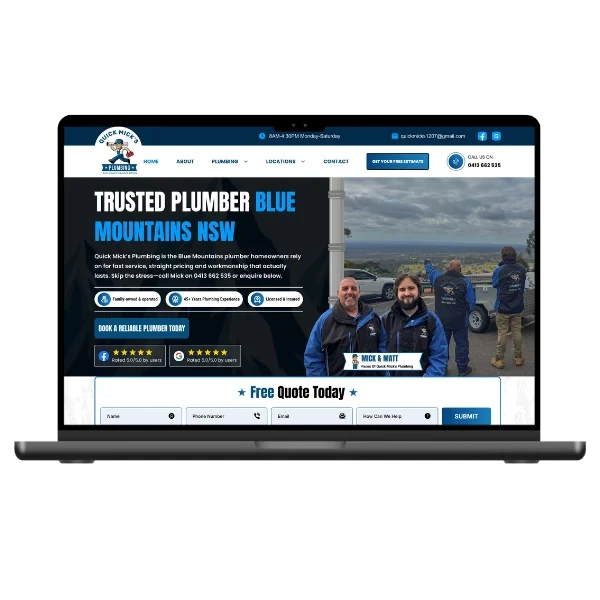
Different platforms, same shape. The ads bought leads at a knowable price and stop the day the spend does. The rankings took months longer to arrive and now bring work with no meter running.
So which should you run first?
It depends what the book needs. Diary empty now: ads, they're the fast lever. Steady work, building for next year: rankings, slower but owned. Established with room in the budget: both, because each covers the other's weakness. There's no universal winner, which is why agencies argue about it forever.
-
The diary is quiet now
Ads first. A Google Ads campaign can be live inside a week, the budget caps wherever you set it, and you'll know within a month what a lead costs in your trade and area.
-
Building next year's lead source
SEO first. If current work is steady enough to wait out the build, the months of tradie SEO work turn into rankings that keep paying after the invoices stop.
-
Established, with budget for both
Run both. Ads hold the diary while rankings build, and a client searching your trade can meet you twice on one screen: the paid slot up top, the ranking underneath.
Running both has a quieter benefit as well. Within weeks, the ads tell you which searches turn into booked jobs rather than tyre-kickers, and that's exactly where the SEO work should aim. Paid buys the data. Rankings bank it.
Which side are we on?
Both, which is worth knowing while you read. KINGTRADIE builds websites, runs local SEO and manages Google Ads for Australian trade businesses, so nothing on this page steers you towards the dearer option. The advice above holds whoever you hire, including if you hire nobody and run the ads yourself.
What the month-to-month work looks like on the rankings side is on our SEO for tradies page. Either way, there are no lock-in contracts, and the website, the rankings and the ad account all stay in your name.
Ads or rankings questions?
Five short answers before you pick a lane.
Is SEO cheaper than Google Ads?
Over a year or two, usually. SEO costs the same whether it sends you ten clicks or ten thousand, so the cost per enquiry falls as rankings grow. Ads charge for every single click at auction rates, which across the two published Australian cost guides we reviewed in July 2026 run anywhere from about $2 to $35 in the trades. Early on, ads are often the cheaper way to a first lead.
Should a small business do SEO or Google Ads first?
Ads first if the diary needs filling, because they work in days and you can cap the spend. SEO first if enquiries are steady and you're building for next year, because the months of waiting cost you nothing you need now. Cash flow decides it more than marketing theory does.
What is the difference between SEO and SEM?
SEM stands for search engine marketing and, in most agency quotes today, it means paid search ads, the same thing as Google Ads or PPC. SEO is the unpaid side: earning a spot in the results Google ranks on merit. If a proposal says SEM, ask whether it covers any SEO work at all.
Do people click on ads or organic results?
Organic, overwhelmingly. SparkToro's 2024 study of real US search clicks found paid ads capture only around 1% of clicks, while roughly 360 of every 1,000 searches end at an unpaid, non-Google site. Partly that's because fewer than one search in five shows an ad; where one does show, it earns roughly 5 to 10% of clicks.
Can you run SEO and Google Ads at the same time?
Yes, and established businesses often should. The ads keep leads arriving while rankings build, the same search can show your business in both the paid and unpaid results, and the ad data tells you which searches turn into paying jobs, which is where the SEO should aim. The real constraint is budget.
Where these numbers come from
Last reviewed: 20 July 2026
- SparkToro 2024 zero-click search study (Datos clickstream panel), retrieved July 2026
- Cost-per-click ranges: compiled across the two published Australian Google Ads cost guides we reviewed in July 2026
- Search volumes and click costs marked as estimates: Semrush Australia, retrieved July 2026
- US paid-vs-organic click-share shift: Similarweb SERP data, January 2025 vs January 2026, retrieved July 2026
- Mr Loo campaign figures: our published case study, as reported
- Quick Mick's results: our published case study, as reported
Figures retrieved July 2026. Click prices move with competition and season, so check your own account data before trusting anyone's averages, including ours.
Rather talk it through?
Book a call and bring the trade, the area and what a good month looks like. We'll run the maths on both paths and tell you which one we'd start with in your shoes. If you want us to run it, the quote is fixed up front.
Book a call